 -11%
Beladiri Praktis Pertahanan Diri dari Bullying untuk Remaja
Okta Setiawan, S.Pd., Dr. Adika Fathailah, M.Pd., Wawan Syafutra, M.Pd.
Rp85.000
Rp76.000

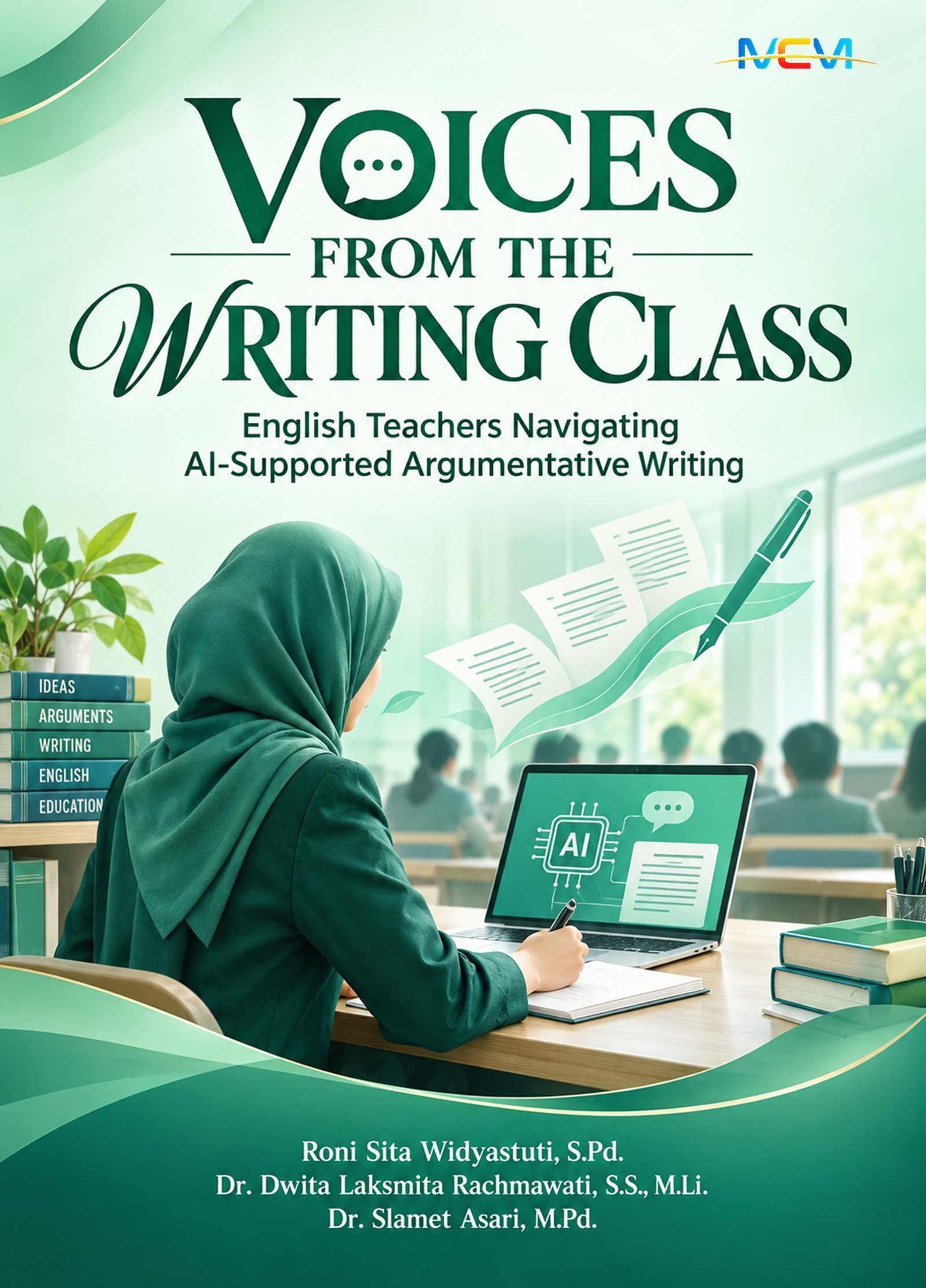
oleh Roni Sita Widyastuti, S.Pd., Dr. Dwita Laksmita Rachmawati, S.S., M.Li., Dr. Slamet Asari, M.Pd
Rp80.000
Rp90.000
Hemat 11%JUDUL:
VOICES FROM THE WRITING CLASS : English Teachers Navigating AI-Supported Argumentative Writing
PENULIS :
Roni Sita Widyastuti, S.Pd.
Dr. Dwita Laksmita Rachmawati, S.S., M.Li.
Dr. Slamet Asari, M.Pd.
SINOPSIS :
Voices from the Writing Class: English Teachers Navigating AI-Supported Argumentative Writing explores the transformation of English writing instruction in an era of increasingly accessible Generative Artificial Intelligence (AI). AI offers new possibilities for teaching and learning by generating ideas, producing texts, providing feedback, and supporting various stages of the writing process. At the same time, its use raises important concerns about originality, plagiarism, inaccurate information, technological dependence, and ownership of ideas. This book invites readers to consider AI not simply as a technological tool, but as part of a changing educational landscape that requires teachers to rethink how technology can be integrated without losing the human purpose of education.
A central focus of the book is AI-TPACK, an extension of the Technological Pedagogical Content Knowledge framework within the context of AI-supported education. Effective AI integration requires teachers to combine technological skills with sound pedagogical strategies and strong knowledge of English writing. In argumentative writing, AI can support students in generating ideas, exploring different perspectives, organizing arguments, improving language, and receiving feedback. However, students still need to develop their own positions, evaluate evidence, construct logical reasoning, recognize counterarguments, and make informed decisions. Therefore, AI is presented as a scaffold for thinking rather than a replacement for students' intellectual work.
Ultimately, the book presents a human-centred vision of English Language Teaching in the age of AI. The role of teachers evolves into that of facilitators, learning designers, evaluators of AI-generated information, developers of effective AI-supported strategies, and guides for responsible technology use. Through discussions of teachers' experiences, challenges, reflections, and professional development, the book offers valuable insights for English teachers, teacher educators, lecturers, postgraduate students, curriculum developers, school leaders, and educational practitioners. Above all, it emphasizes that while AI may transform the tools and processes of teaching, the heart of English education remains human: helping learners think critically, communicate effectively, create meaningfully, and develop their own voices.
-11%
Okta Setiawan, S.Pd., Dr. Adika Fathailah, M.Pd., Wawan Syafutra, M.Pd.
Rp85.000
Rp76.000
 -11%
Fatmawati, M.Pd., Prof. Dr. Anita Yus, M.Pd., Prof. Drs. Sriadhi, S.T., M.Pd., M.Kom., Ph.D., Dr. Dulat Saragi, M.Hum.
Rp95.000
Rp85.000
 -11%
Khairul Hasni
Rp95.000
Rp85.000
 -10%
Rp80.000
Rp72.000
 -10%
MGMP PPKn SMP/MTs Kota Bengkulu
Rp120.000
Rp108.000
 -10%
Prof. Dr. I Nyoman Mahaendra Yasa, S.E., M.Si., Prof. Dr. Drs. Made Kembar Sri Budhi, M.P., Dr. Made Dwi Setyadhi Mustika, S.E., M.Si., Dr. Made Santana Putra Adiyadnya, Se., M.Si., Made Sinthya Aryasthini Mahaendrayasa S.E., M.E., I Made Putra Yasa,...
Rp100.000
Rp90.000